Akira: User Research
The process of designing the user personas for an autonomous snow removal solution.
This is part of a larger project on designing a mobile app for an autonomous snow removal solution called Akira. If you're interested you can read more about the project and the process of logo development or the design of the app interface.
Problem
Develop a mobile interface for use with an autonomous snow removal solution. That is easy to use for a wide range of homeowners with varying levels of technological skill.
Research
In order to gain insight into the problem space and it's users, various research was completed. Each research method and its respective findings will be discussed below.
Literature Review
A literature review revealed that:
- 96% of snow shovel related injuries occur in and around the home in primarily children under 18 and older adults above the age of 55 [1]
- Poor snow removal and slipperiness is a significant barrier to access for pedestrians [2]
- Many cities have bylaws requiring homeowners to remove snow from sidewalks within a certain grace period [3-4]
- Users often anthropomorphize similar devices like the Rumba [5]
Master-Apprentice
A master-apprentice session was completed in which the the homeowner and primary snow remover of the home acted as the master, and I observed the process of clearing the driveway and sidewalks, acting as the apprentice. During the session, the master demonstrated the task and I recorded the process on video. After the task was completed, I asked the user to walk through the task using think-aloud protocol while watching the video, and I asked questions.
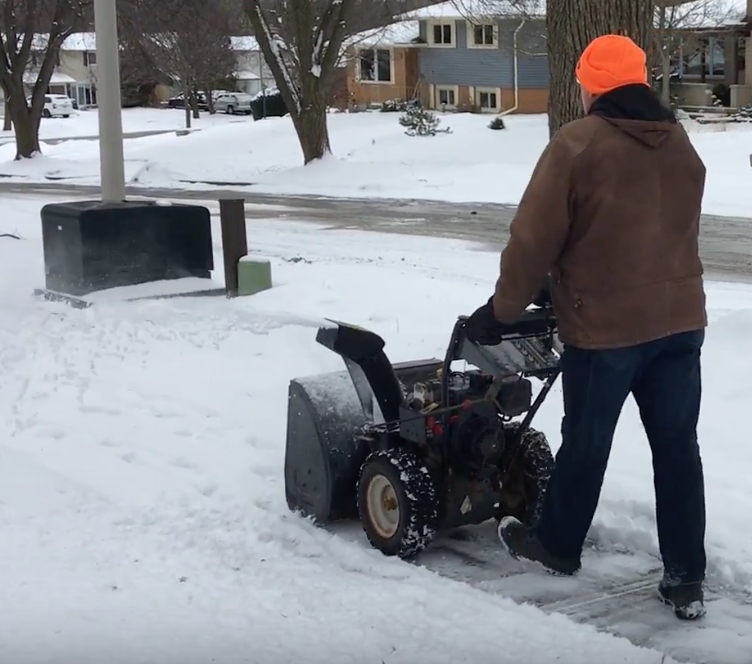
The master-apprentice session yielded the following insights: [6]
- Time is the biggest factor of inconvenience. On average, it takes the homeowner 30-45 minutes to clear property of snow if a heavy snowfall has occurred.
- Comfort with machinery is also a factor. Other people in the household will generally avoid using the snowblower because they are not as comfortable with the tool.
- There is a quiet expectation that if there was a big snowfall and you own a snowblower you will clear your neighbours sidewalks.
Interviews
Interviews with non-primary snow removers and other residents of the home revealed that: [7]
- The non-primary snow remover prefers to not clear snow because of the physical demands of both the snowblower or shovel
- Due to the effort it takes to start a snowblower, the non-primary snow remover will choose to complete minimal shoveling instead
- Clearing snow often causes the user to have sore wrists, shoulders, and back for a few days after clearing snow
- Unexpected snowfall is often a contributor to morning stress and late arrivals to work
- Young home residents notice that snow removal takes a significant amount of time and results in less quality time with family members responsible for removing snow
Fly-on-the-Wall
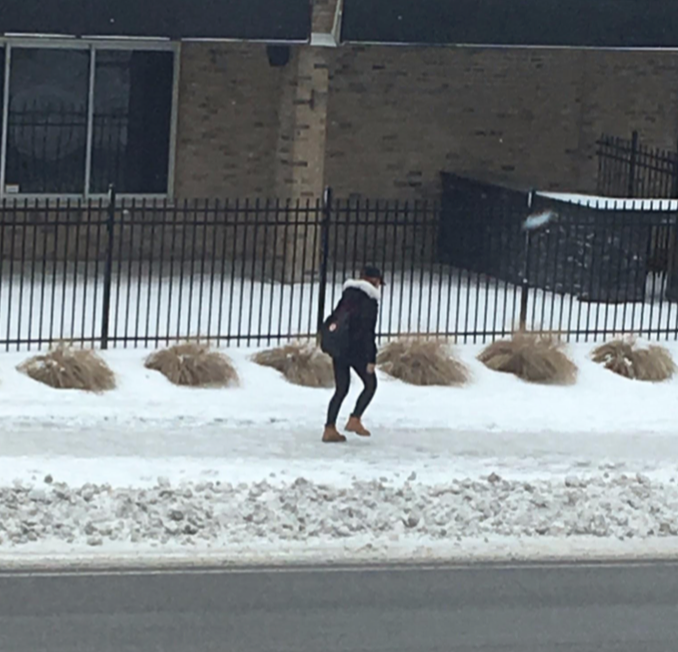
A fly-on-the-wall session was completed to get further insight into the needs of pedestrians.
- Many pedestrians use headphones or ear buds, making them oblivious to oncoming machinery such as snow blowers or cars
- Icy conditions cause pedestrians to walk slowly and irregularly
- Even in areas which have been plowed, snow and ice is inadequately removed or accumulates quickly after it is cleared
Personas
Based on the research above, two personas for primary users were developed. Will is the homeowner who has the physical ability to remove snow, but he lacks time. Alice is the homeowner who lacks physical ability, but has more time to clear the snow.
|
|


Two secondary user personas were also developed. Karen is also a homeowner who is not the primary snow remover and Rachel is a pedestrian whose primary mode of transportation is walking.
|
|


References
- D. Watson, B. Shields and G. Smith, "Snow shovel–related injuries and medical emergencies treated in US EDs, 1990 to 2006", The American Journal of Emergency Medicine, vol. 29, no. 1, pp. 11-17, 2011.
- "FALLS IN THE OUTDOOR ENVIRONMENT AMONG OLDER PERSONS – A TOOL TO PREDICT ACCESSIBILITY?", in 20th International Co-operation on Theories and Concepts in Traffic Safety, Lund University, 2007.
- City of Waterloo, "Sidewalk Clearing", The City of Waterloo, Waterloo, 2015.
- City of Edmonton, "Walking: Maintaining Winter Sidewalks", City of Edmonton, Edmonton, 2017.
- "Customer's Review of iRobot Roomba: Cats, Dogs, Kids, Tile, Carpet and Rugs", Amazon.ca, 2013. [Online]. Available: https://www.amazon.ca/review/R37ZHPH2EAG2CE/ref=cm_cr_dp_title?ie=UTF8&ASIN=B005GK3IVW&channel=detail-glance&nodeID=2206275011&store=kitchen. [Accessed: 17- Jan- 2017].
- K. Cook, "Master-Apprentice Session: Snow Removal", Waterloo,Ontario, 2017.
- S. Fraser and M. Cook, "Snow Removal Experience", Waterloo, Ontario, 2017.